

Students
The American Association of Wildlife Veterinarians strives to educate, encourage, and inspire future wildlife professionals.
STUDENT CHAPTERS
Students with active membership in AAWV may establish a student chapter of the organization at their institution. If your institution is not listed below, contact secretary@aawv.net for more details.
Are you an AAWV member interested in supporting the next generation of wildlife veterinarians and professionals? Consider contributing to AAWV student chapter events! To get added to their networking roster, please submit this form. If you ever need to revise your contact information or want to remove yourself from the roster, there is a form for that too!


STUDENT EXTERNSHIPS, INTERNSHIPS, & SEASONAL POSITIONS
Wildlife Rehabilitation Center of Minnesota (Roseville, MN)
Varies annually
Colorado Parks & Wildlife; National Park Service; Wyoming Game & Fish Department (Fort Collins, CO; Sybille Canyon, WY)
Closes in early Fall annually
Fossil Rim Wildlife Center (Glen Rose, TX)
Apply 18-24 months in advance
Oregon Department of Fish & Wildlife (Corvallis, OR)
Closes 04-15 annually
Bird Alliance of Oregon (Portland, OR)
Until 2026-12-06 & 2026-02-12
Belize Wildlife & Referral Center (San Ignacio, Belize)
Rolling
California Department of Fish & Wildlife; Karen C. Drayer Wildlife Health Center (CA)
Closes 09-01 annually
University of Georgia, Southeastern Cooperative Wildlife Disease Study (Athens, GA)
Rolling
Progressive Animal Welfare Society (Lynnwood, WA)
Closes 08-31 annually
STUDENT AWARDS & GRANTS
AAWV Wildlife Veterinary Externship Grants
The AAWV recognizes that externships are an extremely important aspect of a veterinary student’s learning experience. Therefore, the AAWV Board of Governors has approved a competitive program, AAWV Wildlife Veterinary Externship Grants, to provide funds to assist veterinary students’ participation in wildlife related externships. These grants are $500.00 per student for a total of up to 10 students per year. The funds can be used as the student requires for expenses encountered during an externship (i.e., travel expenses, such as airfare, rental vehicles, lodging, food, etc.). The grant requirements are: a) A demonstrated and written interest in Wildlife Veterinary Medicine b) The student must be a current student member of the AAWV c) The student must be currently enrolled in an accredited veterinary college d) The externship must include a significant wildlife veterinary medicine focus (as approved by the AAWV Scholarship Committee). Applications are accepted each January through February with externships commencing June through May of the following year. Applications should be submitted via email to student.rep@aawv.net. The following must be provided in order to be considered: 1. Cover letter outlining: i) The students career goals in wildlife veterinary medicine; ii) How the proposed externship experience could help achieve these goals; iii) How the awarded externship grant could help achieve these goals. 2. Current curriculum vitae 3. One letter of reference or faculty assessment 4. Proposed budget for the externship 5. Externship description (e.g., duration, location, objectives, agency/organization, etc.) Applicants will be scored on free-ranging wildlife experience, captive wildlife experience, research experience, involvement in wildlife organizations, written communication, and the letter of reference to capture the diverse range of experience that students may possess. The scoring rubric will be as follows (total maximum points = 30) and final selection of the recipients will be made by the AAWV Scholarship Committee: - Career goals and interest in wildlife medicine (1-5) - Justification for choosing the specific externship experience (1-5) - Quality and content of the planned externship experience (1-5) - Letter of reference/faculty assessment (1-5) - Wildlife medicine experiences (free ranging, captive, research) (1-5) - Budget (1-5)
Bob Dittmar Student Travel Award
Given in honor of the late Dr. Bob Dittmar, USAHA & AAWV jointly sponsor a student to travel to and attend the USAHA-AAVLD annual meeting. Travel expenses, lodging, and complimentary registration to the meeting is provided. Eligible students are not required to attend the entire meeting, but preference will be given to applicants who are available to introduce themselves and provide a 10-minute presentation on a wildlife topic of their choosing during the USAHA Committee on Wildlife session at the meeting. To apply for an award, students must: 1) Submit a 1-page essay explaining their interests and experience in diagnostic veterinary medicine or veterinary public practice, their career aspirations, and what they hope to gain by attending the USAHA-AAVLD Annual Meeting; 2) Provide a topic of their research or what the focus of their presentation would be (1-2 sentences maximum); 3) Submit a CV or résumé; and 4) Be a current student member of AAWV. Deadlines vary by year, contact vice.president@aawv.net for more details.
AAWV Student Scholarship Award
In keeping with their close relationship with WDA, AAWV sponsors an award for either a veterinary student or a veterinarian currently enrolled in a graduate program, residency or equivalent educational endeavor. This award acknowledges outstanding academic and research accomplishment, productivity and potential to contribute to the field of wildlife medicine/research. The award has a value of US$500 and includes a plaque. To be considered, students must: a) be an AAWV member at the time of application and b) must also submit an abstract to present their work at the annual international WDA conference and have the abstract accepted as an oral presentation.
USAHA Student Scholarship Award
Recipient of the US$1000 award must meet the following criteria: Be a current student in veterinary medicine, graduate studies, or intern/resident in a field related to the mission of USAHA Have an interest in regulatory or public medicine Be an active AAWV member (does not have to be a USAHA Student Member, although joining is encouraged) Be available to attend the USAHA Annual Meeting in the fall of that year and present research or a topic relevant to the USAHA Wildlife Committee Interested students must submit an application to the AAWV Secretary containing the following: Student name, contact information, University affiliation, and relevant information for his/her field of study/specialization Cover letter CV Once a suitable candidate has been identified, AAWV nominates that individual to USAHA. Deadlines vary by year, contact secretary@aawv.net for more details.
STUDENT SUPPORT IN ACTION
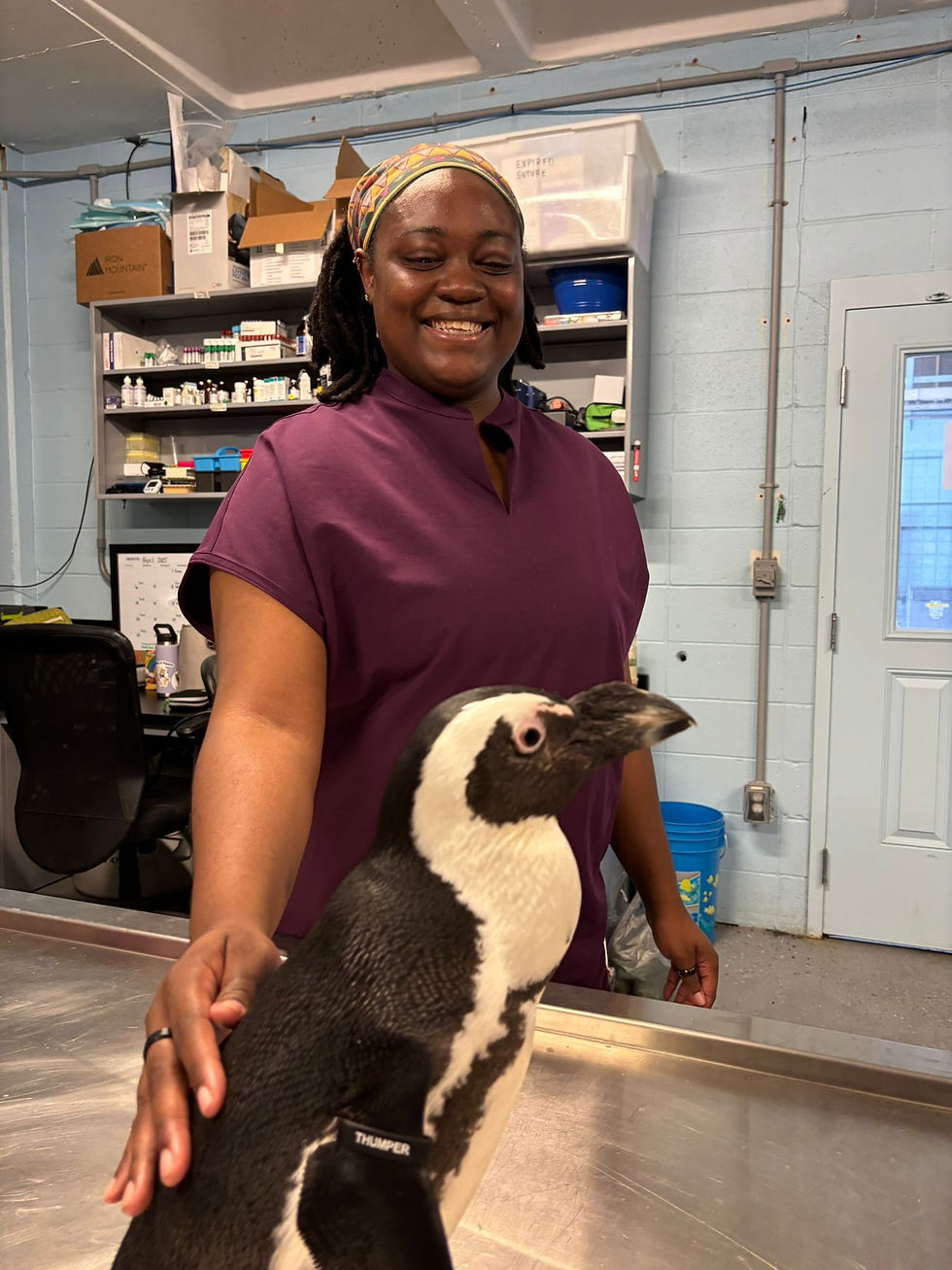


Alessandria Aikerson
Tuskegee University
College of Veterinary Medicine
DVM Candidate 2027
Thanks to the generous support of the AAWV Externship Grant, I had the incredible opportunity to attend the MARVET program hosted at the Mississippi Aquarium in June 2025. This immersive program provided invaluable clinical and educational experiences that deepened my understanding of aquatic wildlife health, strengthened my practical skills, and affirmed my commitment to a career in conservation and wildlife medicine. Throughout the week, we participated in clinical rounds, hands-on labs, lectures, and case discussions focused on a diverse array of marine species, including dolphins, sea turtles, penguins, manatees, rays, and various fish. One of the core themes was the application of One Health principles, particularly how anthropogenic changes, such as freshwater influxes from the Mississippi River, influence marine mammal mortality events and ecosystem balance. We explored the effects of harmful algal blooms, hypoxia, and toxin exposure, including domoic acid, on species such as manatees and sea lions. At the Mississippi Aquarium, we rotated through specialized lectures including aquarium medicine, water quality management, and disease recognition in aquatic species. We learned to identify and manage skin ulceration, buoyancy disorders, parasitism, reproductive diseases in rays and sharks, as well as endocrine conditions such as thyroid hyperplasia. One of the most rewarding components of the externship was the emphasis on clinical skills. Under expert guidance, I learned to perform physical exams, venipuncture, and diagnostic imaging on sea turtles. We also studied common disorders, including GI obstructions, pneumonia, fibropapillomatosis, and parasitism. I especially appreciated the clinical techniques labs, where we practiced tube feeding, jugular catheterization, and cloacal lavage. Besides the wealth of knowledge and the opportunity to network with everyone, my favorite activity was the hands-on skills labs. I loved traveling to Dauphin Island to participate in a bottlenose dolphin necropsy, which reinforced the importance of pathology in wildlife medicine. I also enjoyed performing physical exams on sea turtles and conducting venipuncture and ultrasound on rays and sharks in the aquarium's touch pool. These moments were not only exciting but also incredibly affirming as I developed my clinical confidence in aquatic animal medicine. The program also presented real clinical cases that illustrated the complexity and nuance of aquatic medicine. We reviewed cases including melanoma in dolphins, lymphoma in a manatee, and lead toxicity in a dolphin pod, each highlighting the clinical and ethical challenges of diagnosis, treatment, and welfare decisions. The MARVET program exceeded all expectations. It sharpened my clinical reasoning, expanded my technical skills, and introduced me to mentors and colleagues passionate about wildlife health. I am sincerely grateful to AAWV for supporting my participation. This externship has strengthened my foundation in aquatic animal medicine and energized my path forward as a future conservation-focused veterinarian.

Marg Bednarek
University of Illinois Urbana-Champaign
College of Veterinary Medicine
DVM Candidate 2026
I am so grateful to the American Association of Wildlife Veterinarians for their generous financial support, which allowed me to complete an externship at the Wildlife Rehabilitation Center of Minnesota this summer. Spending a month at one of the nation’s busiest wildlife hospitals during peak season was a formative experience and the highlight of my clinical year. I had the opportunity to strengthen my skills in wildlife medicine through triage, treatment planning, diagnostic imaging, and surgery. I also had the privilege of learning from and collaborating with an incredible team of veterinarians, technicians, students, and volunteers who inspired me with their dedication and shared valuable career insights. This externship reaffirmed my commitment to pursuing a career in avian and wildlife medicine, and I am truly thankful for the support from AAWV that made it possible.

Maris Daleo, PhD
University of Illinois Urbana-Champaign
College of Veterinary Medicine
DVM Candidate 2028
This summer, I found a temporary home in Fairbanks while working with the Alaska Department of Fish and Game’s Division of Wildlife Conservation. I was fortunate to work with a small but highly passionate and patient team, consisting of two veterinarians, Dr. Beckmen and Dr. Lieske, and my officemate and biologist, Cassie. Although I was only with the team for a few months, I immediately felt included and supported throughout my time in Alaska. As a DVM/PhD student, I was worried about rejoining the veterinary curriculum after focusing on my PhD. I was hoping that Alaska would inspire me to return to the books- little did I know it would do much more! When I joined the team in May, I was quickly exposed to the heavy case load that calving season brought. Most of our work was pathology-focused, so we performed many necropsies daily on native Alaskan wildlife, which truly expanded all creatures great and small. Because I began the externship in early May, many of the first necropsy cases I was exposed to were of caribou calf mortalities. However, the species and case load shifted throughout the summer, where June brought many foxes and July brought many bat necropsies. This experience was so beneficial to me as a veterinary student because I had thought I could be interested in pathology, and this was the perfect experience for me to begin detective work on determining the etiology in these cases. For example, in my first week, we performed a necropsy on a pregnant Dall sheep and the fetus, which was an amazing anatomical lesson. I spent much of the early summer observing but got behind the blade and necropsied several animals sent into our department, including foxes, beavers, muskrats, and a moose head. Although I received a lot of mammalian experiences, I also got my fair share of avian necropsies, where we surveyed for avian influenza in birds killed during airport culls. Because my PhD focused on turtles, I had little experience thinking about zoonotic diseases before this externship, which quickly changed. I also learned about all the zoonotic diseases in Alaska, particularly rabies virus, Brucella suis biovar 4, Francisella tularensis, Toxoplasma gondii, Neospora caninum, and Erysipelothrix rhusiopathiae. This was exciting to think about One Health approaches to wildlife health more directly, and become more aware of the human aspect of working with wildlife. These pathogens also provided me with a new insight into diagnostic tools like the Brucella card test and the snap rabies test, which made testing for these pathogens rapid and accessible. Although we performed many necropsies, I truly received the whole rounded experience of working for Fish and Game. For example, I also got to work on my tick identification as we worked to ID ticks brought to us, with hopes to keep winter ticks out of the state. I learned how to skin animals and about the taxonomy process. I also experienced the on-call nature of wildlife in Alaska and got some live animal experience, working with orphaned moose calves and eagles. I also had the opportunity to learn about chemical immobilization (which was a perfect partner for Dr. Mark’s class) and the darting process in Alaska. While I came to Alaska to learn about veterinary medicine, I am lucky to be leaving the externship with many lessons about community, devotion, and resilience. I am beyond thankful for Dr. Beckmen and Dr. Lieske for mentoring (and taking care of me) over the summer, and I am thankful for the AAWV’s endless support!


Lexi Durant
University of California, Davis
School of Veterinary Medicine
DVM Candidate 2026
I am so grateful for the opportunity I had to complete the Rocky Mountain Wildlife Veterinary Externship with the support of the AAWV Externship Grant. I was hosted by Colorado Parks and Wildlife (CPW) during this month-long externship that provided valuable hands-on experience in wildlife population medicine. In addition to working closely with professionals at CPW, I had the privilege of learning from veterinarians and biologists at Wyoming Game and Fish, the National Park Service, and USDA’s National Wildlife Research Center. At CPW, I participated in fieldwork focused on plague management, including flea-control efforts in prairie dog colonies. This work allowed me to practice clinical skills, study an important zoonotic disease, and contribute to active conservation efforts for one of North America’s most endangered mammals - the black-foored ferret. I also assisted with CPW’s captive bighorn sheep research herd, where I monitored anesthesia, collected blood samples, and even helped surgically castrate a lamb. These clinical experiences were complemented by numerous opportunities to perform necropsies on a variety of species, including several days dedicated to examining white-taield deer heads for meningeal worm. Over the course of the externship, I also completed a final project, which was presented on the last day. For my project, I analyzed lead levels in eagles submitted to CPW from throughout the state. I gained valuable experience during this project in statistical modelling and data interpretation. This externship not only strengthened by clinical and analytical skills but also reinforced my commitment to a career in free-ranging wildlife management. I am sincerely thankful to everyone at CPW for their time and mentorship, and to AAWV for making this formative experience possible.